
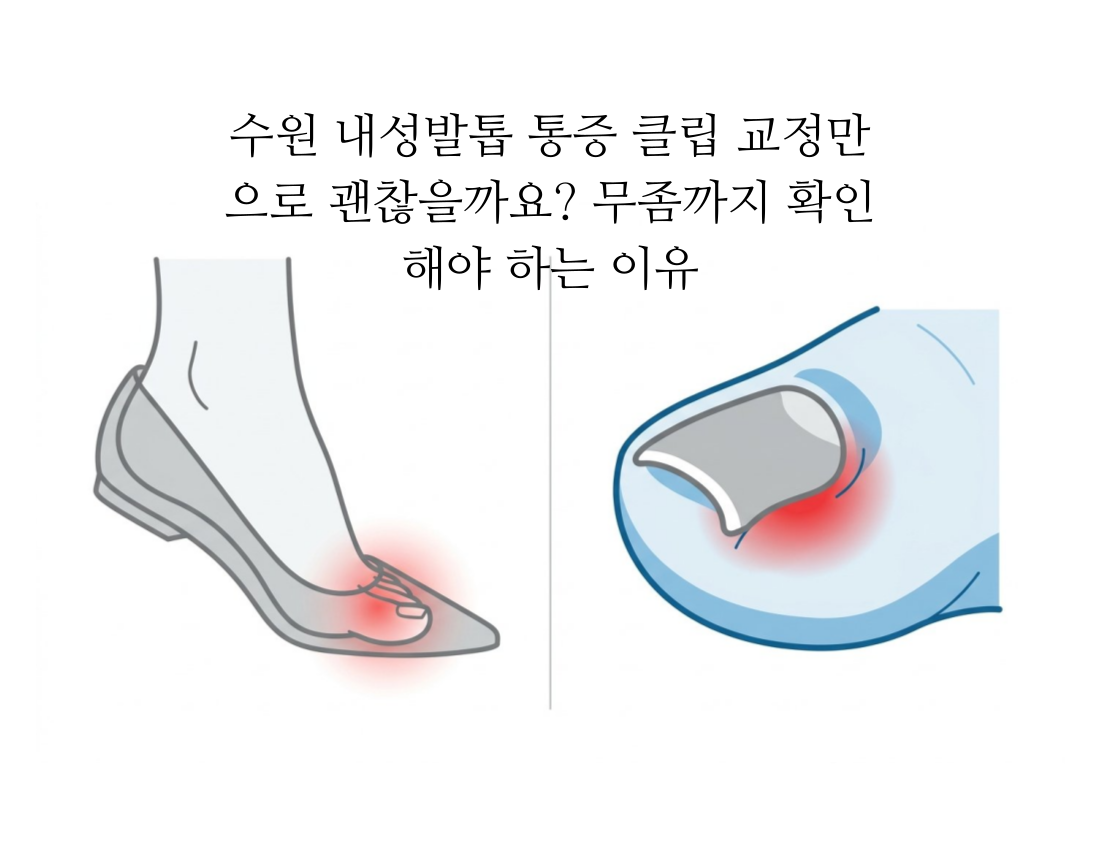
Ingrown Toenail Check The Fungus First
Many people put off going to the hospital because they feel a sharp, tingling pain every time they walk, but are afraid when they hear that the toenail might have to be removed.
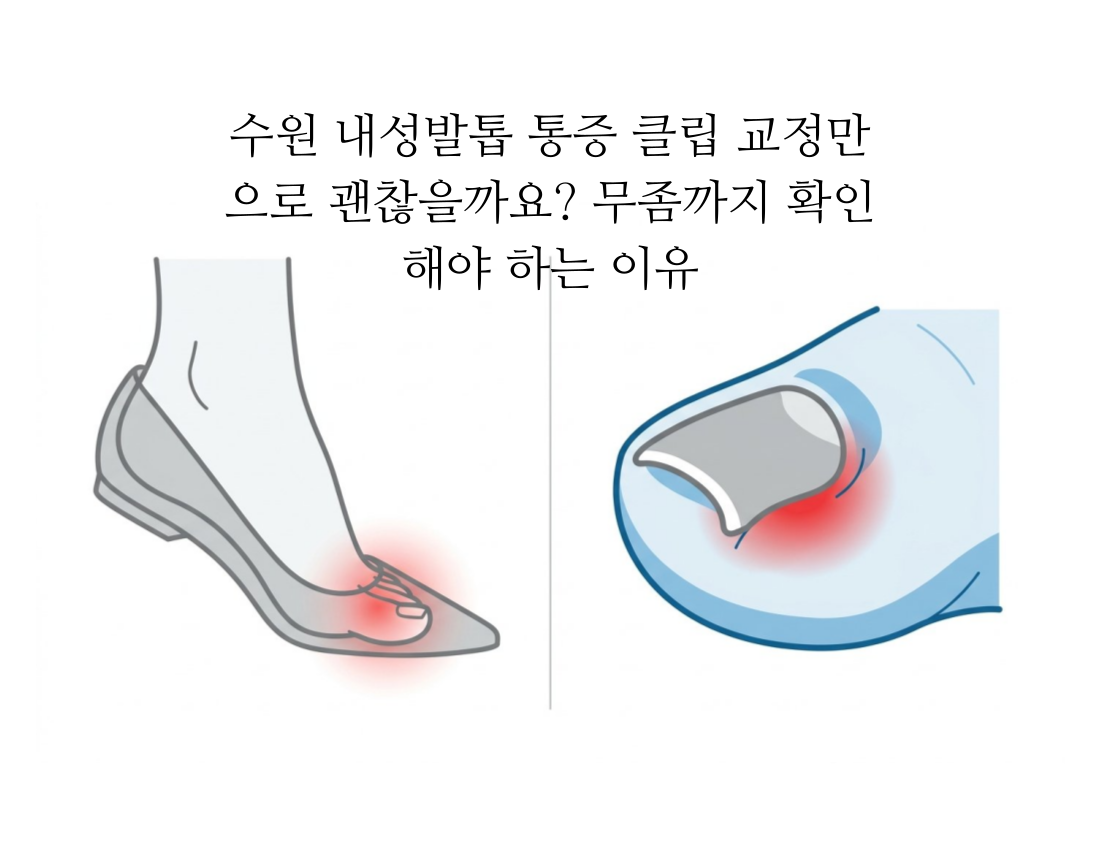
Ingrown toenails are not caused by genetics alone
It is difficult to attribute them solely to the shape of your toenails from birth. In many more cases, acquired factors combine and cause the nail to grow into the surrounding skin.
| Cause | How it contributes |
|---|---|
| Improper nail care | Cutting the nail too short or rounding the edges can cause it to grow into the surrounding skin |
| Ill-fitting shoes | Shoes that squeeze the toes create ongoing pressure that can deform the nail |
| Toenail fungus | The nail thickens and becomes deformed, which can lead to an ingrown toenail |
| External impact · weight gain | Increased pressure on the toes can change the nail's shape |
Because the causes vary, removing the nail without first identifying the cause is unlikely to resolve the problem at its root.
We approach the problem with correction, not surgery

We combine correction with treatment. The main approach is clip correction. A specially made correction clip is attached to both edges of the nail to gradually lift the part that is growing into the skin. Rather than forcing the nail straight, the process is closer to creating a path for it to grow in the right direction. For more details, see Oniko (Fungal Nail Laser) Clip Correction Guide.
Correction alone may not be enough
If a fungal infection is causing the ingrown toenail, correction alone may not prevent it from returning. As long as the fungus remains, the nail will continue to thicken and become misshapen. In fact, many people who come in with ingrown toenails also have a fungal infection.
That is why we combine correction with treatment for the fungal infection. We use Laser to address the fungus located deep within the nail, first creating an environment in which a healthy nail can grow. Our approach to treating both conditions together is outlined in Oniko Clarity Combination Treatment.
Can I take care of it at home?
If the pain is not severe and the condition is at an early stage, cutting the nail straight across and wearing shoes that do not squeeze the toes may help. However, if pain or inflammation has already started, self-care may worsen the condition. In particular, avoid forcibly lifting or digging out the nail, as this increases the risk of a secondary infection.
If you are concerned about recurrence
The key to reducing the chance of recurrence is to address the underlying cause as well. Correct the nail's shape with a clip, treat any accompanying conditions such as a fungal infection, and continue by changing how you trim your nails and choose your shoes after treatment. These steps help prevent the problem from returning in the same place.
How long do I need to wear the clip?
It varies depending on the condition of the nail, how deeply it has grown into the skin, and how quickly it grows, but the clip is generally worn for 3-6 months while progress is monitored. The clip causes almost no disruption to daily life, and many people feel their pain ease relatively early. The important thing is not to stop on your own just because the pain has subsided. If you stop before the nail has fully grown out, its shape may become distorted again.
Finally
An ingrown toenail is not pain you have to simply put up with. And removing the nail is not the only option. We recommend first checking whether your condition can be treated with correction and whether a fungal infection is also present.
Reviewed by: Dr. Kwon Yu-ri · Family Medicine Specialist, Academic Director of the Korean Society of Melasma First published 2026-07-31 · Last reviewed 2026-08-31
This article is intended to provide medical information. Effects and side effects may vary from person to person. Please consult with the Medical Team to determine the appropriate diagnosis and whether Treatments are right for you.