
Re POT and StarWalker for Pigment Lesions
If solar lentigines and age spots that caught your eye one day are bothering you, it may help to first look at how Re-POT and StarWalker approach pigmentation based on its depth.
Why age spots and solar lentigines can become deeper if left untreated
Solar lentigines and age spots are not merely light marks that remain on the skin’s surface. Many people hope they will fade over time, but in reality, the pigment tends to extend deeper when left untreated.
Skin that is continuously exposed to UV rays produces excessive melanin pigment to protect itself. When this pigment clusters in certain areas, lesions form. They may start out light brown, but over time, the boundary between the epidermis and dermis can break down and the pigment roots can deepen, making improvement more difficult.
That is why even blemishes that look similar on the surface can differ in depth and nature. Carefully assessing each person’s skin condition and delivering energy suited to it is key to pigmentation Skin Care.
How Re-POT Laser protects the skin
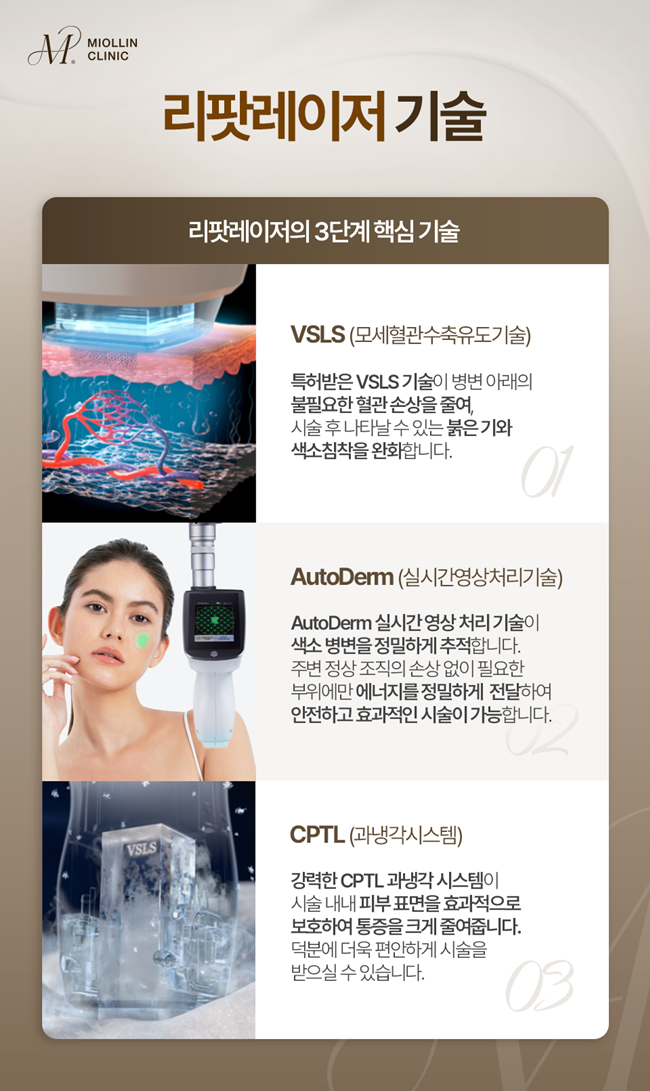
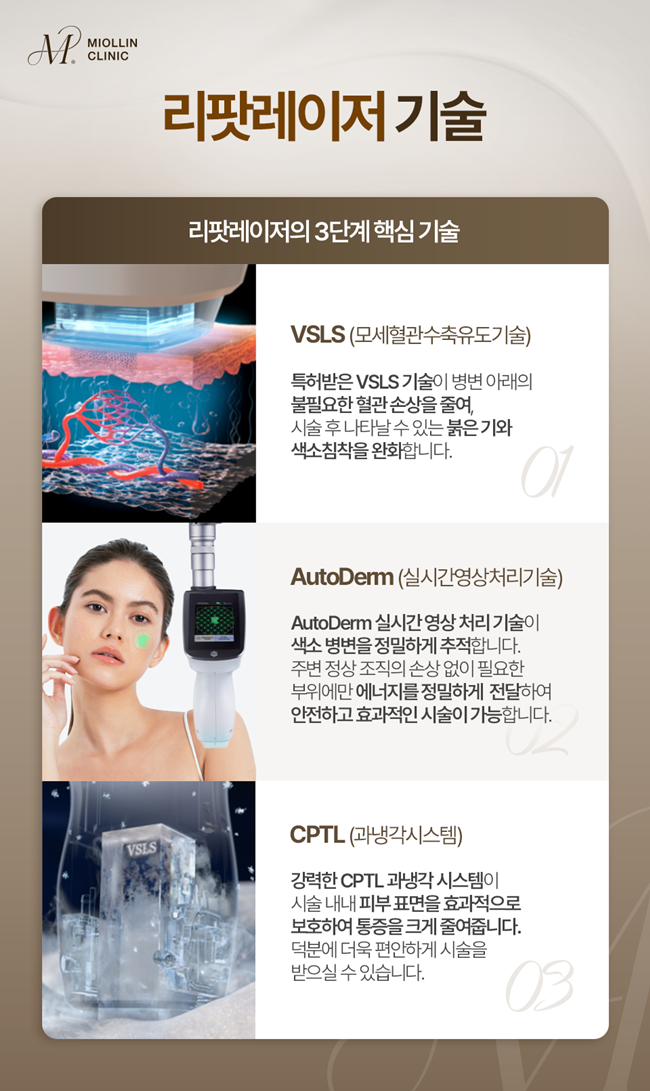
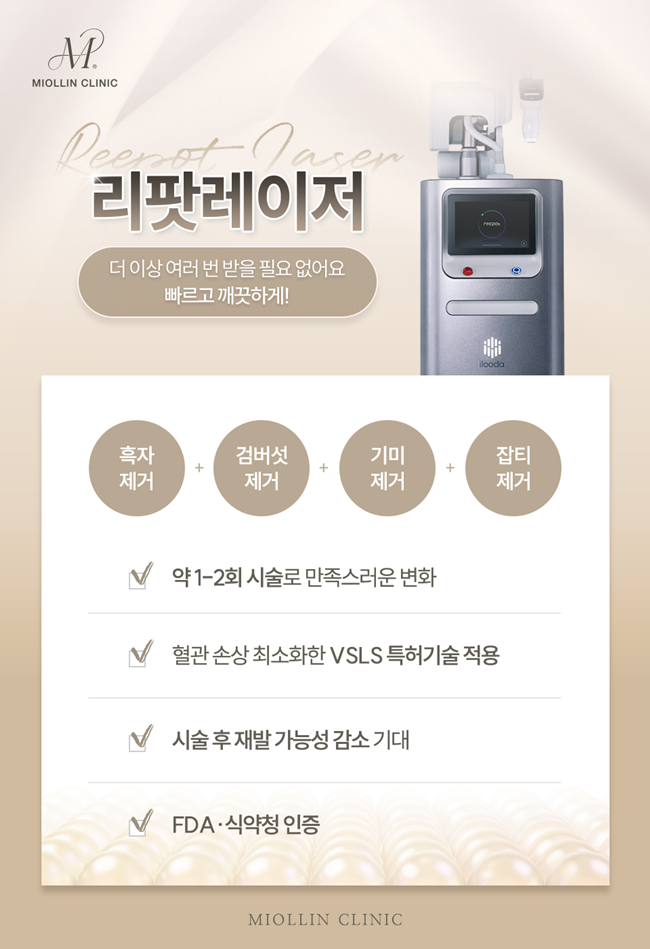
One reason pigmentation Skin Care was difficult with conventional approaches was the risk of damaging skin tissue or causing prolonged redness when using high energy. Re-POT Laser is a device equipped with VSLS technology to address this concern, focusing on reducing damage to blood vessels.
Protecting blood vessels can reduce unnecessary redness and pigmentation, allowing for a more stable procedure. A system that cools the skin to a set temperature also operates during Treatments to protect the epidermis.
This helps keep the skin’s surface cool while delivering energy only to pigmented lesions, which may help reduce discomfort and shorten the recovery period.
Precise targeting that protects normal tissue
The most important consideration when treating pigmentation is to avoid damaging normal skin without lesions. AutoDerm technology, incorporated into Re-POT Laser, processes images in real time to detect only areas with pigmentation.
As a result, unnecessary energy is not delivered to normal tissue, allowing for precise targeting. Energy can be concentrated only on the areas that need it, even for lesions with indistinct borders or small lesions.
Reducing damage to surrounding tissue can ease concerns about scabs or scarring that may occur after Treatments and make it easier to return to daily activities. Depending on the location of the pigmentation, we may first consider Re-POT to support precise pigmentation Skin Care.
Different wavelengths for pigmentation at different depths
Pigment may be distributed shallowly in the epidermis, but it often also lies deep in the dermis, so a single wavelength may have limitations. StarWalker Laser is a multi-purpose device that combines modules with several wavelength ranges.
| Wavelength | Main depth of action | Pigmentation to assess |
|---|---|---|
| KTP 532nm | Superficial epidermis | Freckles and surface blemishes |
| Nd YAG 1064nm | Deep dermis | Difficult-to-treat pigmentation and deep lesions |
| Er YAG 2940nm | Skin surface | Areas requiring refinement of skin texture |
Because each wavelength has a different penetration depth and area of action, it can address a broad range of concerns, from surface blemishes to deep, difficult-to-treat pigmentation. A major advantage is that the intensity and depth can be adjusted based on the patient’s skin thickness and the location of the pigmentation. For pigmentation that spans multiple layers, StarWalker, which addresses each layer, can be useful.
How pigment is broken into tiny particles
StarWalker Laser is designed to use specific wavelengths of light to selectively target melanin pigment. It uses various pulse modes, including Q-switched and picosecond modes, to deliver intense energy in a short time and break pigment particles into smaller pieces.
When the photacoustic effect breaks pigment clusters down into tiny, sand-like particles, they can be more easily eliminated through the body’s metabolic processes. Its features to consider are summarized below.
- Selectively targets pigment while reducing damage to normal tissue
- Applies different wavelengths and intensities according to depth
- Uses ASP technology to evenly adjust energy distribution
- Aims to reduce variation in results through uniform irradiation
However, pigmentary conditions vary from person to person in their cause and depth, so the approach should also differ even when using the same device. Rather than applying uniform energy based only on the visible lesion, it is important to assess underlying pigmentation as well.
Pigmentation Skin Care often takes multiple sessions to gradually fade rather than being completed in one session. The deeper the lesion, the less strain there may be in taking a gradual approach while checking the skin’s recovery, rather than concentrating strong energy in one session. Between Treatments, thorough sun protection and avoiding forcibly removing scabs can help prevent pigmentation from becoming darker again. Planning aftercare as part of the process is what helps maintain a clearer skin tone over time.

Why diagnosis comes first
Successful pigmentation Skin Care starts with correctly understanding your skin condition. In the examination room, I first use the MARK-VU diagnostic device to assess the depth and distribution of pigmentation, sebum levels, and even underlying Wrinkle, then determine which wavelength is suitable.
I examine the skin three-dimensionally from the front as well as from the left and right sides to assess the condition of both the epidermis and dermis. Based on the data obtained, I take an individualized approach to each person’s pigmentation pattern. I also continue to monitor band care and the skin’s response after Treatments, aiming to reduce the burden and help the changes last. If the pigmentation is light in tone or mixed with other lesions, we may also consider Revlite to support care for a wider area of pigmentation.
If you have any questions, please feel free to chat with us now.
Reviewed by: Dr. Kwon Yu-ri · Board-certified in Family Medicine, Academic Director of the Korean Melasma Society
First published 2026-02-09 · Last reviewed 2026-07-03
This article is intended to provide general information. Treatments and results may vary depending on individual conditions, so please consult a Medical Team for an accurate diagnosis and consultation.