
ultherapy for hollow cheeks checklist
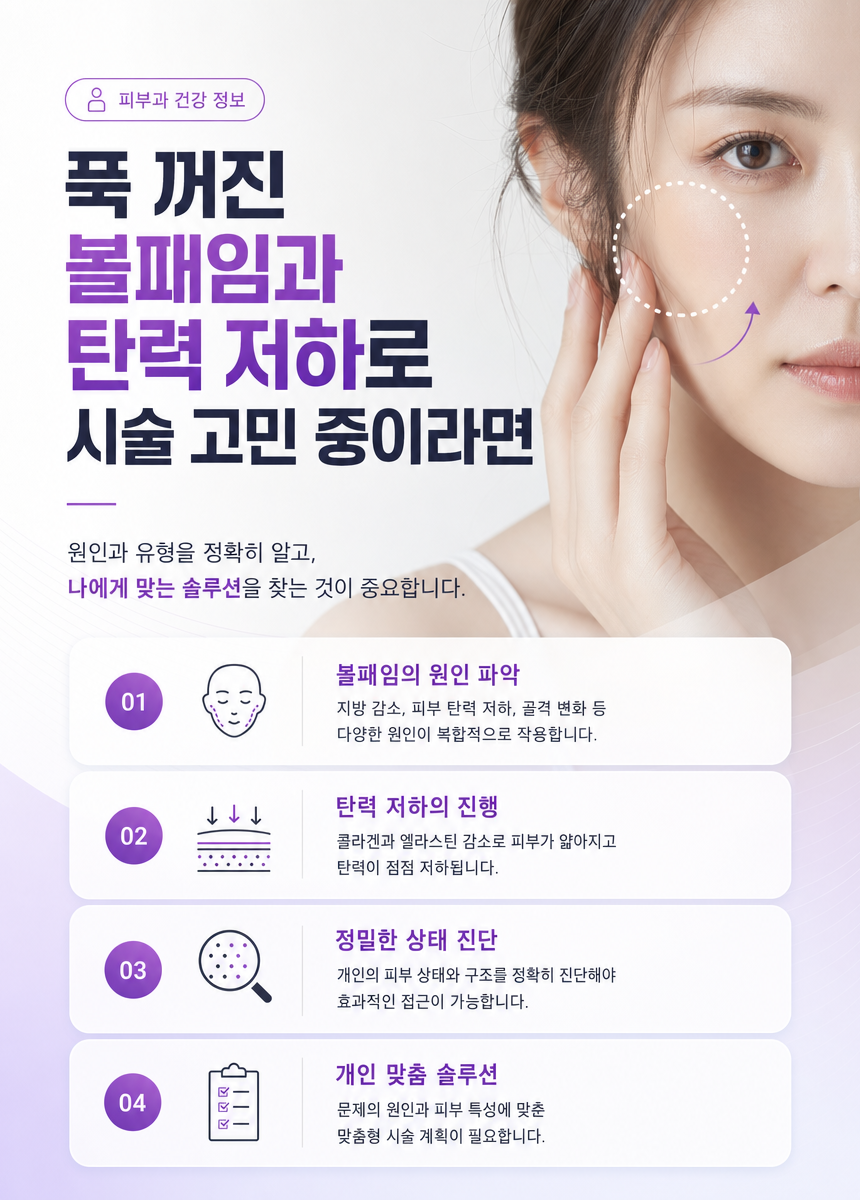
Many people feel that their face looks more tired than it really is because their cheeks appear particularly sunken whenever they look in the mirror. Some notice that their cheeks seem to have lost volume and start researching their options, only to find themselves unsure whether lifting or a volume treatment is right for them.
Sunken-looking cheeks are not just a matter of fat loss
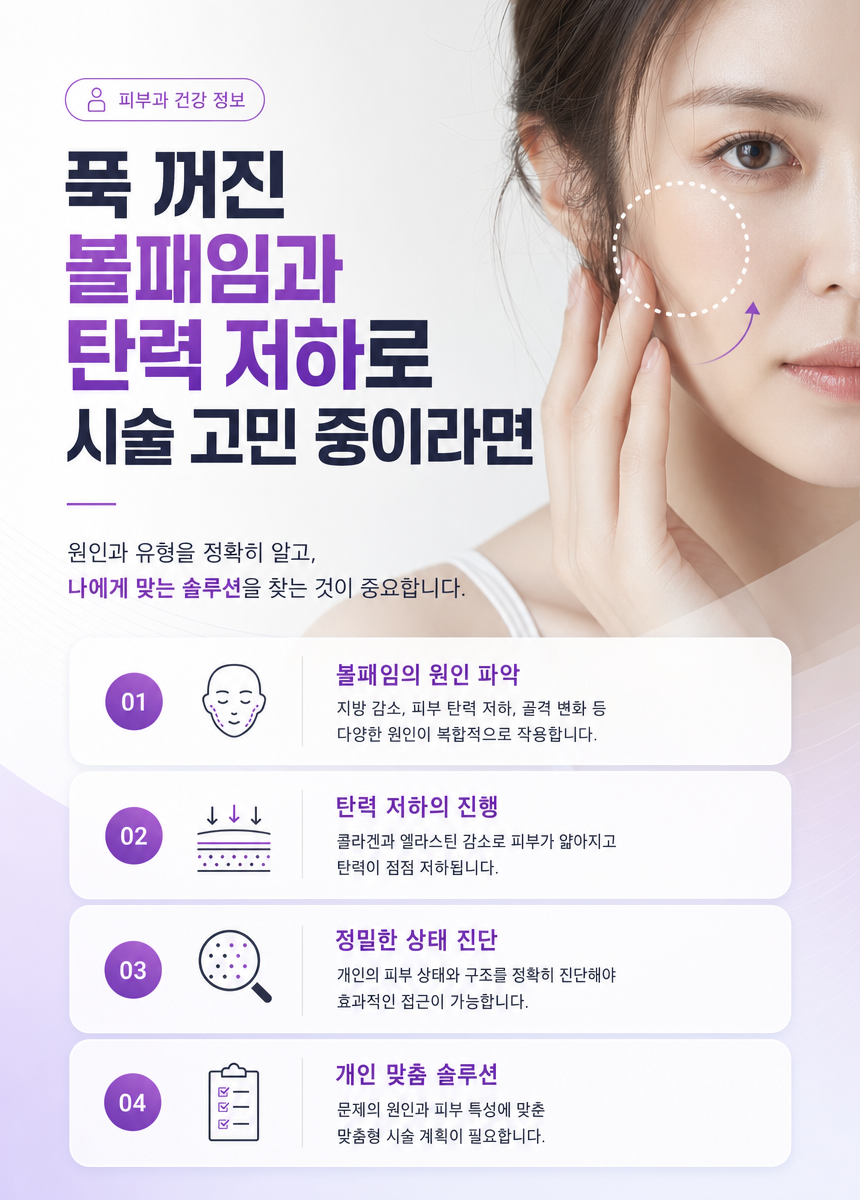
Sunken cheeks are not caused solely by age-related fat loss. They can result from a combination of factors, including reduced skin elasticity, sagging of the fascial layer, and an overall decline in the body's balance. When sunken cheeks occur alongside reduced elasticity, the facial contours can look sagged, making your expression appear more tired.
Rather than rushing to choose a treatment, it is important to carefully assess the points that need to be considered beforehand.
Understand the cause before lifting the surface
Visible symptoms on the skin are only one result; the true cause may lie deep within the skin or in an imbalance throughout the body. It is difficult to achieve a satisfying result if you focus only on lifting the sunken area. A thorough understanding of your skin thickness, fat volume, and fascial layer condition is needed to reduce steps that are not required.
During consultations for sunken cheeks, we often meet people who believe that pulling the skin up as strongly as possible will improve the condition. Based on clinical experience in family medicine, the cause should first be analyzed through precise diagnosis, including MARK-VU imaging, taking into account not only the skin but also the body's overall balance. Even when the cheeks appear equally sunken, the approach differs completely depending on whether the cause is fat loss, sagging skin, or a lax fascial layer.
How does Ultherapy work?
Ultherapy, which delivers ultrasound energy to the fascial layer, is a treatment that creates thermal coagulation points in the deeper layers of the skin to stimulate collagen regeneration. Because it works by lifting sagging tissue from within, it can be one option when overall sagging and deep wrinkles occur together. Like focusing sunlight with a magnifying glass to create heat at a single point, it creates precise points deep within the skin to encourage the surrounding tissue to tighten.
However, if the cheeks are already sunken, stronger lifting is not necessarily the best choice. If too much energy is delivered to areas where it is not required, the sunken appearance of the cheeks may become more noticeable.

Is stronger lifting always the answer for sunken cheeks?
That is why, before Treatments, it is important to carefully assess your face shape, skin thickness, fat volume, and degree of sagging, then create a personalized plan that avoids the sunken areas or adjusts the energy intensity and number of shots. Since the approach varies depending on your condition, you can consider the following categories.
When volume loss is significant, fillers selected for each area may be used to restore sunken areas. If fat reduction is also needed, Onda, which targets the dermis and fat layer, may also be considered according to your situation.
Delivering strong energy directly to sunken areas of the cheeks can make them appear more pronounced, so it is important to plan different energy levels for different areas.
Checklist to review before Treatments
Before making a decision, we recommend checking the following:
- Whether your face shape, skin thickness, fat volume, and degree of sagging have been thoroughly assessed
- Whether the plan avoids the sunken cheek areas or adjusts the energy and number of shots
- Whether your skin's response will be checked after Treatments and guidance provided on calming Skin Care or regenerative Skin Care
At Mioline Suwon, we carefully assess your facial structure and skin condition, first confirming whether Ultherapy is appropriate, and then create a detailed plan tailored to the areas that need it. Rather than increasing the intensity unnecessarily, we prioritize treating only what is needed, with precision.
Diagnosis and settings matter as much as the device
Even with the same Ultherapy device, results depend on the diagnosis and settings determined by the Medical Team using it. The energy level, number of shots, and target depth need to be adjusted based on which layers of the face are sagging and to what extent, as well as which areas are most affected by sunken cheeks. It is also a good idea to check whether genuine tips are used and whether you receive a thorough explanation and assessment before and after Treatments. Ultimately, results depend less on the device's name than on how your face is assessed and how the plan is tailored to you.
Post-Treatment Care and Recovery
With Ultherapy, it is important not only to look at the immediate changes after Treatments, but also to monitor the collagen regeneration process that continues within the skin. Your skin may be temporarily sensitive afterward, so it is best to avoid strenuous exercise, saunas, and alcohol for about one week. Thorough moisturizing and sun protection may help with recovery. Redness or slight swelling may occur briefly, but usually subsides over time.
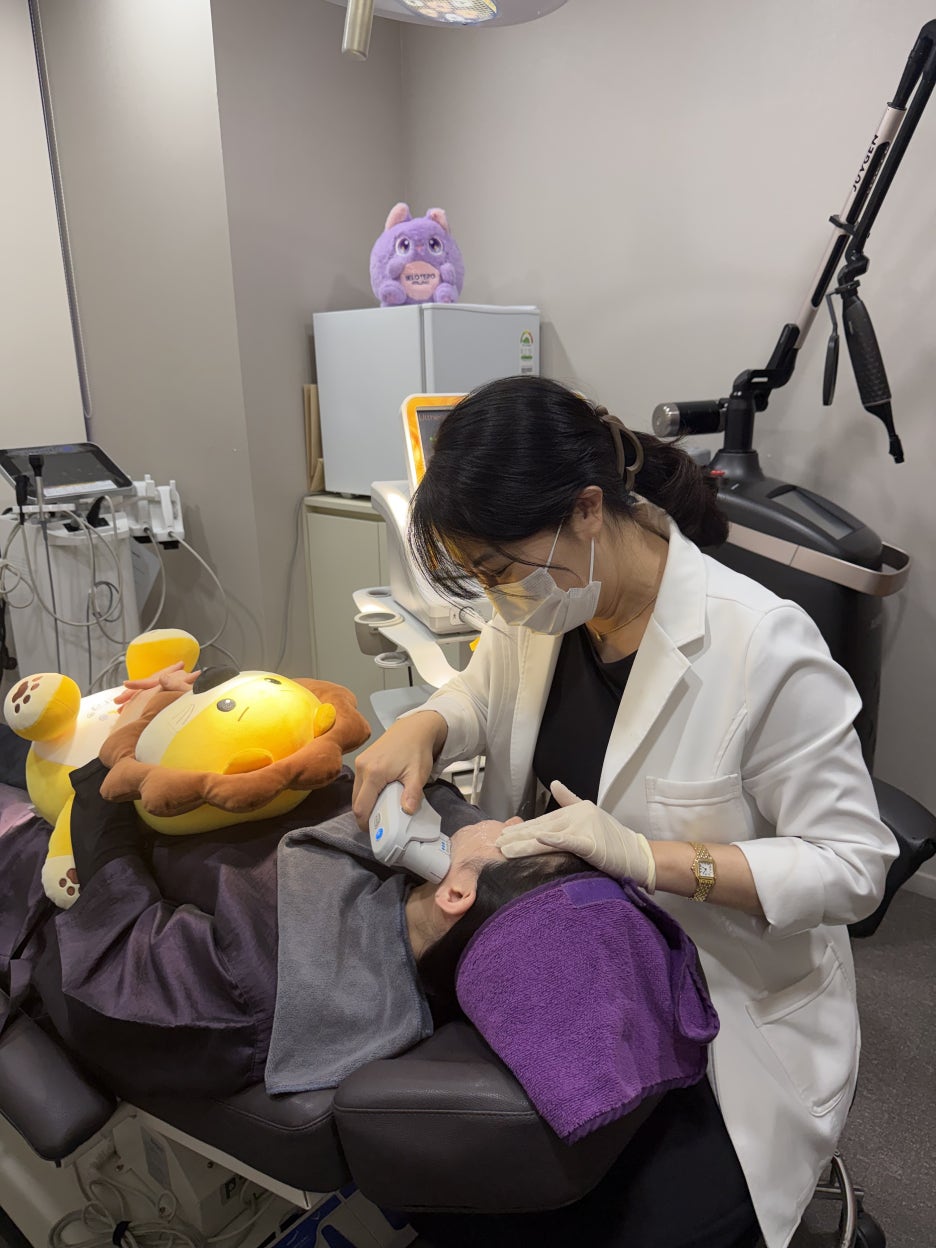
In particular, when you have sunken cheeks or significantly reduced elasticity, it is important to carefully monitor your response after Treatments. If needed, combining calming Skin Care or regenerative Skin Care may help your skin recover more comfortably. Mioline Suwon continues to check your skin condition and recovery after Treatments and provides guidance on a Skin Care approach suited to your individual condition.
Chat with us now [blocked]
💬 Get a consultation [blocked]
Reviewed by: Dr. Kwon Yu-ri · Family Medicine specialist, Academic Director of the Korean Melasma Society First published 2026-05-26 · Last reviewed 2026-07-03
This article is intended to provide general medical information. Treatment methods and results may vary depending on the individual's condition. Please make decisions about diagnosis and treatment only after consulting with the Medical Team.