

Top 5 Olive Young Foam Cleansers and How to Choose
This article is a medical advertisement prepared by the clinic for the purpose of providing medical information. It complies with Article 56, Paragraph 1 of the Medical Service Act.
If you have ever looked in the mirror after washing your face and worried because your skin felt unusually tight or, conversely, because shine and sebum were more noticeable, it may be time to take another look at your foaming cleanser. At Olive Young, products labeled mildly acidic, deep cleansing, acne, pores, and hydration sit side by side, making it difficult to choose a foaming cleanser that suits your skin at a glance.

We receive more questions than you might expect in the consultation room about which foaming cleanser to use. So we personally compared foaming cleansers that are easy to find at Olive Young and narrowed them down to a TOP 5. To start with the conclusion, what matters more than the ranking is what kind of cleansing your skin needs right now. Below, we’ll first explain why each product made the Olive Young foaming cleanser TOP 5, then organize the criteria for choosing a foaming cleanser by common questions.
Olive Young Foaming Cleanser TOP 5: Why Each Product Ranked Where It Did
5th — A foaming cleanser focused on basic cleansing

The 5th-ranked product is a foaming cleanser that works well as a basic cleanser. However, when compared side by side with the other four products, it has some shortcomings, so we placed it last in the TOP 5. It may be worth considering if you want a clean, basic face wash rather than special features.
4th — A gentle foaming cleanser for everyday use
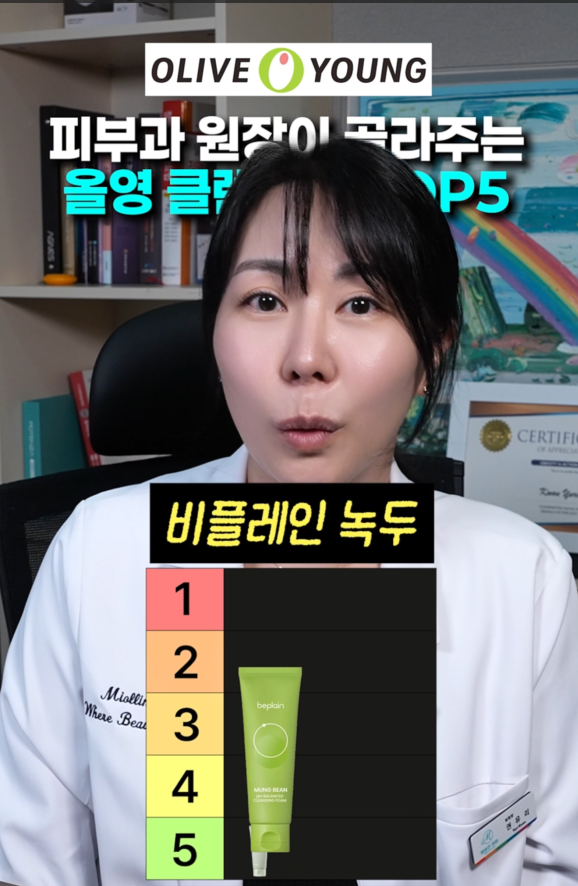
The 4th-ranked product is geared more toward reducing the burden on the skin than emphasizing cleansing power. It may be worth considering if you are concerned about tightness after washing your face or are looking for a gentle foaming cleanser for everyday use.
3rd — A foaming cleanser for days when sebum and pores are a concern

The 3rd-ranked product is strong in pore and sebum care. For that reason, we rated it as something to use on days when sebum and oil are especially high, rather than as a daily foaming cleanser for morning and evening. It is a good fit if sebum or pores are a concern, or if you want to wash more thoroughly on days when your skin is oily.
2nd — A daily foaming cleanser for blemish-prone skin

We rated the 2nd-ranked product highly because even skin prone to frequent breakouts can use it relatively comfortably. It may be a good choice for those who have difficulty choosing a foaming cleanser because of acne or sebum, and for those considering a daily face wash for acne-prone skin.
1st — A foaming cleanser for days when sebum and oil are high

The 1st-ranked product is a good choice for days when sebum and oil are especially bothersome. It contains salicylic acid, so it may be considered for skin that needs pore and sebum care, and is well suited to days when you are concerned about impurities inside your pores.
That said, this TOP 5 ranking is not the right answer for everyone. On days when sebum and oil are high, you may want to prioritize cleansing power and sebum care, but for a foaming cleanser you use morning and evening, you should also consider tightness and irritation after washing. That is why, when choosing a foaming cleanser, I consider what cleansing my skin needs today before asking where a product ranked.
How to Choose a Foaming Cleanser: 5 Frequently Asked Questions
Is a mildly acidic foaming cleanser always better?

It is difficult to say that something is better for every skin type simply because it is mildly acidic. The skin’s surface naturally maintains a mildly acidic environment, so it is understandable that many people look for a mildly acidic foaming cleanser to reduce irritation. However, even mildly acidic foaming cleansers vary in their cleansing ingredients and feel, and the skin’s response after washing also differs depending on its current condition, such as whether it is dry, oily, or sensitive. That is why I do not judge a foaming cleanser based only on whether it is mildly acidic.
Does oily or acne-prone skin need strong cleansing power?

It is easy to assume that the oilier your skin is, the more thoroughly you need to wash it until it feels squeaky clean. However, frequently using a foaming cleanser with strong cleansing power is not the answer simply because you have a lot of sebum. In the consultation room, along with asking what foaming cleanser you use, we also ask how many times a day you wash your face, how much sunscreen and makeup you wear, and whether your skin feels tight or irritated afterward. Even with oily skin, it is better to choose based on the level of cleansing your skin needs today rather than insisting on strong cleansing power alone.
Does your skin need to feel squeaky clean after washing?
A squeaky-clean feeling is not proof that your face has been cleansed well. What I would rather you check is how your skin responds immediately after washing. It is much more accurate to see whether your skin feels excessively tight, dry or stings, or repeatedly becomes red.
If my skin feels tight after washing, does that mean the foaming cleanser is not right for me?
If the following reactions keep recurring, review both your foaming cleanser and your face-washing method.
- Your skin feels very tight as soon as you wash your face
- You often feel stinging or burning
- Your skin quickly becomes red
- Dryness lasts for a long time after washing
- Your skin condition has changed noticeably since you switched foaming cleansers
However, we do not conclude that a particular foaming cleanser is the cause based on just one of these reactions. This is because we also need to consider whether your skin was already sensitive and whether other cosmetics or lifestyle habits may have had an effect.
What should I look for when choosing a foaming cleanser at Olive Young?
There are four things I check first.
- Your current skin type and condition — In addition to the general categories of oily and dry, I also consider recent sensitivity, dryness, and breakouts.
- The level of cleansing you need — I consider oiliness, whether you wear makeup, and whether you use sunscreen.
- Your skin’s response after washing — I check whether tightness, dryness, or stinging keeps recurring.
- How you plan to use it — It is fine to use different criteria when choosing a foaming cleanser for comfortable everyday use and one for days when your skin is oily or needs more cleansing.

In Summary
There is no need to choose a foaming cleanser based only on Olive Young’s popularity rankings or the TOP 5 ranking. Even a 1st-ranked product can feel different and be suitable to different degrees depending on your skin condition. Whether it is mildly acidic or has strong cleansing power, look first at how your skin responds after washing rather than focusing on just one feature. Even if you have a lot of oil and sebum, also consider the cosmetics you use and your face-washing habits. Ultimately, the basis for choosing a foaming cleanser is your skin, not the ranking. If you have trouble understanding the signals your skin sends after washing, you may want to discuss them during a consultation.

Reviewed by: Dr. Kwon Yu-ri · Family Medicine Specialist, Academic Director of the Korean Society of Melasma | Last reviewed October 5, 2026
This article is intended to provide medical information, and effects and side effects may vary from person to person. Please consult with the Medical Team to determine the appropriate diagnosis and whether to undergo Treatments. This post is identified as a medical advertisement under Article 56 of the Medical Service Act.