

Epidermoid Cyst Removal in Suwon: Reasons for Recurrence and When Surgery Is Necessary
This post is a medical advertisement prepared by the clinic for the purpose of providing medical information. It complies with Article 56, Paragraph 1 of the Medical Service Act.

If you squeezed out a sebaceous cyst by hand and it came back in the same spot not long afterward, the reason lies in the structure of the sebaceous cyst. For those looking into sebaceous cyst removal in Suwon, the biggest concerns are ultimately recurrence and scarring. Today, we will organize, step by step, the criteria for judging how a sebaceous cyst differs from acne, when surgery is needed, and how the removal method changes depending on the area.
Sebaceous cysts and acne are distinguished by whether there is a sac
Surprisingly many people think sebaceous cysts and acne are the same thing. However, the two conditions differ from their causes.
Acne is a condition in which pores become blocked, sebum accumulates, and inflammation develops. A comedo (core) is often located in the center, and over time it subsides on its own or recovers after extraction.
A sebaceous cyst is a condition in which a sac called a cyst forms under the skin, and sebum and skin debris fill up inside it. A small black opening may be visible in the center, and when touched, a firm, round lump can be felt under the skin. In some cases, a foul-smelling, cheese-like discharge may come out.
Ultimately, the difference is the sac. Acne does not have a sac, but with a sebaceous cyst, as long as the sac remains, no matter how much the contents are squeezed out, it will fill up again and recur. This is precisely why surgical treatment is discussed in sebaceous cyst removal in Suwon.
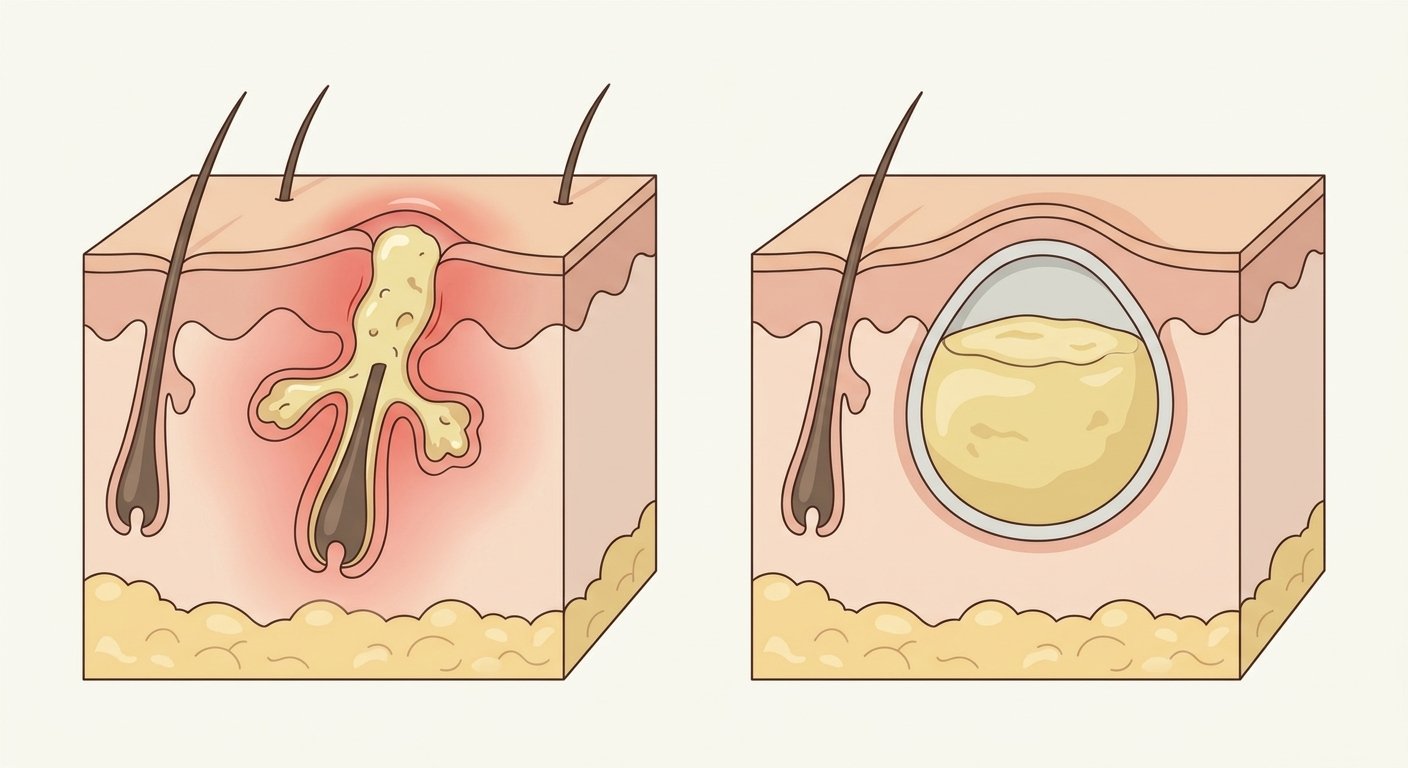
Cases where sebaceous cyst surgery is needed and cases where observation is possible
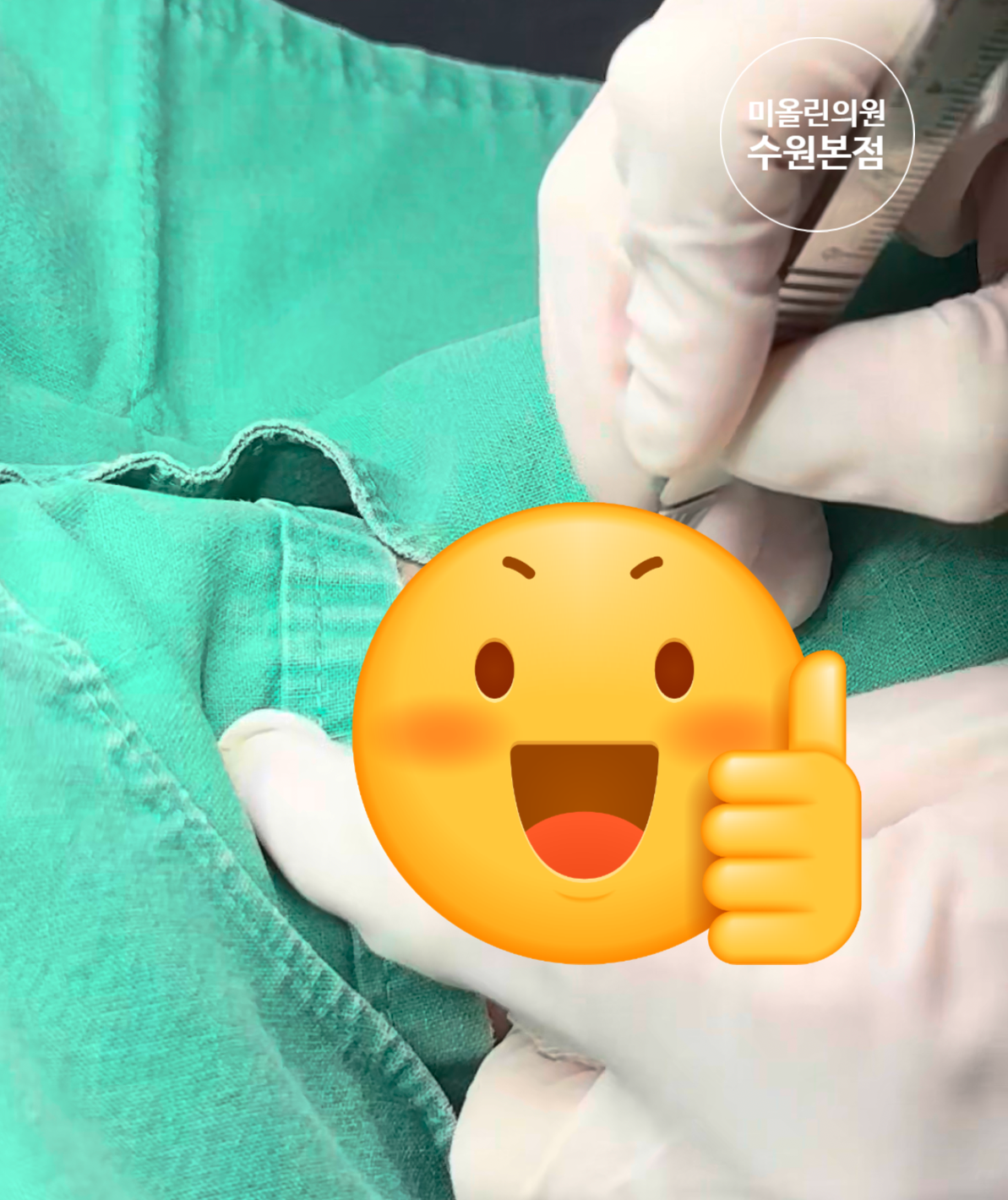
Not every sebaceous cyst needs to be removed right away. If it is small and there is no inflammation or pain, observation without special treatment is also an option. However, if any of the following apply, it is better to consult the Medical Team and decide on the timing of removal.
- When the sebaceous cyst gradually increases in size
- When pain or discomfort is felt
- When inflammation with redness, swelling, and pus recurs
- When it occurs in a cosmetically concerning area such as the face or neck
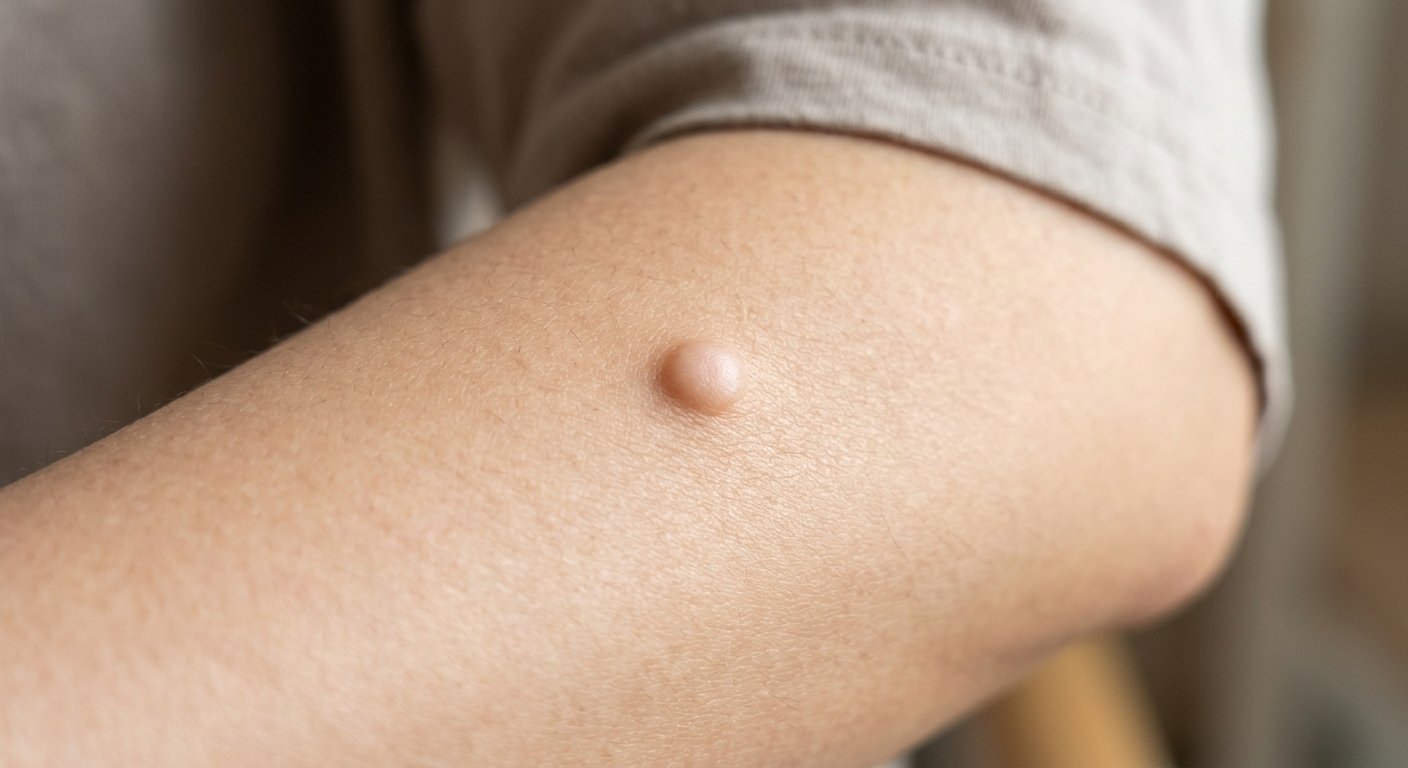
If a sebaceous cyst is left for a long time while inflammation has worsened, surrounding tissue may be damaged, and a larger scar may remain even after removal. Therefore, if it appears likely to cause problems, better results can be expected by removing it in advance when there is no inflammation.
The method of sebaceous cyst removal differs depending on the area
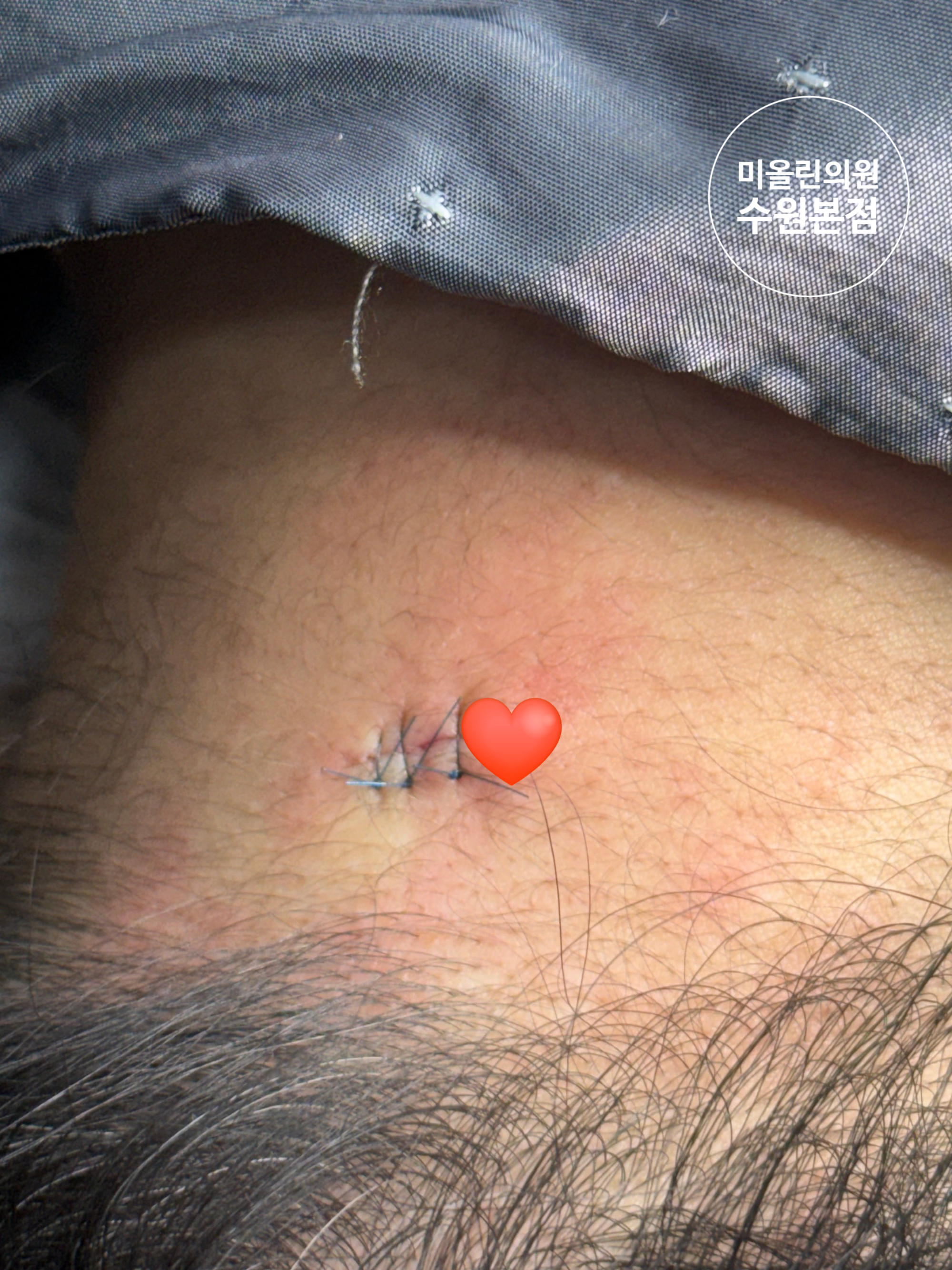
The key to sebaceous cyst removal is to take out the cyst sac completely without leaving any behind. At the same time, the approach needed to reduce scarring differs for each area.
Exposed areas such as the face and neck — These are areas where concern about scarring is greatest, so it is important to remove the sebaceous cyst while minimizing the incision. The incision line is designed along the direction of skin wrinkles, and the focus is on reducing surgical marks with fine suturing.
Non-exposed areas such as the back and buttocks — The skin is thicker, with more movement and friction, so the possibility of recurrence is relatively high. Therefore, more emphasis is placed on completely removing the cyst. Adequate visibility is secured according to the size of the cyst, and the cyst is carefully dissected and removed while thoroughly checking the parts attached to the surrounding tissue so that the cyst wall does not rupture.
Frequently checked questions

For a sebaceous cyst that is red, swollen, and painful, the inflammatory state is checked first rather than removing it immediately. If necessary, medication treatment or drainage is performed first, and removal is considered after the tissue has stabilized.
How much scarring remains after sebaceous cyst surgery depends on the size and location of the cyst, whether inflammation is present, the extent of the incision, and the individual's skin characteristics. If it is a site where inflammation has recurred, the condition of the surrounding tissue should also be examined.
A sebaceous cyst comes back in a previously removed area when only the contents have been drained and the cyst wall (sac) remains. It may also recur if it was difficult to remove the cyst wall intact due to inflammation or rupture.

In summary
For sebaceous cysts, the first step is not squeezing out the contents from the outside, but confirming the condition of the cyst through an accurate diagnosis and determining whether removal is necessary. To reduce recurrence, the sac must be removed as well, and to reduce scarring, it is advantageous to operate using a method suited to the area when there is no inflammation. If you are considering sebaceous cyst removal in Suwon, we recommend having the size and inflammatory state checked from the consultation stage.
Reviewed by: Chief Director Dr. Kwon Yu-ri · Family Medicine Specialist, Academic Director of the Korean Melasma Society | Last reviewed October 5, 2026
These Articles are intended to provide medical information, and effects and side effects may vary by individual. An accurate diagnosis and whether to undergo Treatments should be determined through consultation with the Medical Team. This post is clearly stated to be a medical advertisement pursuant to Article 56 of the Medical Service Act.